



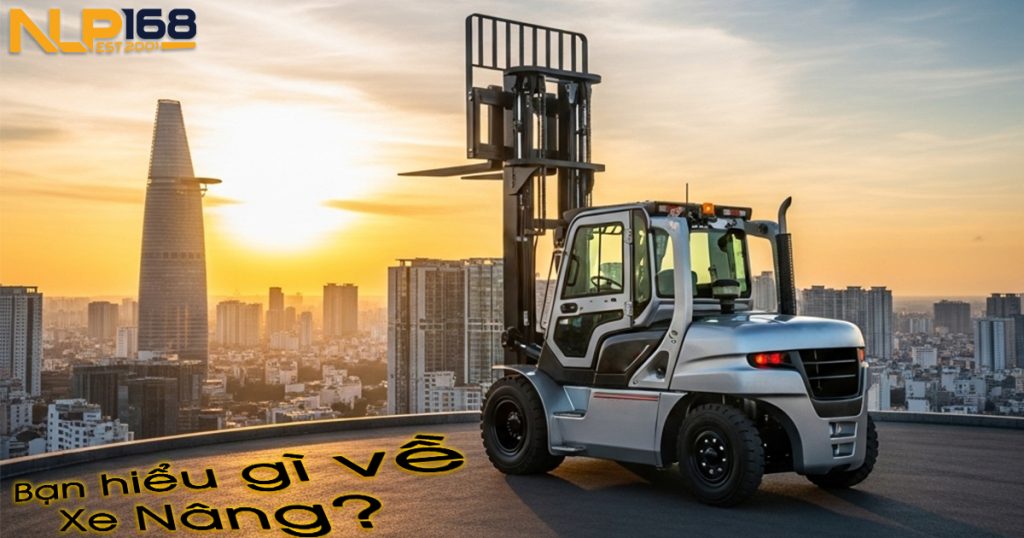
What is a Forklifts? Basic Information
Forklifts is a category of industrial material handling equipment designed to lift, lower, and transport various types of cargo. Its core purposes are to replace strenuous manual labor, speed up material turnover, improve workplace safety, and optimize storage space in warehouses, factories, seaports, and industrial zones.
Forklifts operate on hydraulic principles and can lift loads ranging from a few hundred kilograms to several tens of tons.
Basic Forklift Components
- Load-bearing chassis
- Fork carriage system
- Lifting mast
- Power source (electric, diesel, or gas)
- Operator cabin
- Hydraulic system
Common Types of Forklifts
The global forklift market is highly diverse, categorized by power source, structure, and intended use. Below are the most popular variants:
By Power Source
- Electric Forklifts: Powered by lithium-ion or lead-acid batteries. Key benefits include quiet, zero-emission operation, making them ideal for enclosed environments such as supermarkets, cold storage warehouses, and food processing plants.
- Diesel/LPG Forklifts: Powered by internal combustion engines. These robust, high-speed models are suited for heavy-duty outdoor work requiring the lifting of large loads.
By Structure and Function
Forklifts are also categorized by maximum lifting height:
- Low-lift forklifts (max 3m):
- Hand Pallet Trucks: Used for short-distance pallet movement, including manual push models, mini electric versions, and automated pallet movers.
- Mid-lift forklifts (3–6m):
- Counterbalance Forklifts: The most common forklift type, featuring a rear counterweight to balance front-mounted loads.
- Stacker Forklifts: Designed for elevated stacking, capable of placing cargo on racks taller than standard counterbalance forklifts can reach.
- High-lift forklifts (over 6m):
- Reach Trucks: Specialized for narrow-aisle warehouses with high rack storage. Their fork carriage extends forward to access deep racking.
- Order Pickers: Lift both the operator and load platform to directly access stored inventory, allowing workers to retrieve small parts, individual packages, or full pallets.
Forklifts Applications Across Industries
Warehousing and Logistics
This is the most widespread use case for forklifts, where they are used to:
- Load and unload cargo onto pallet racks and storage shelves
- Transport goods between warehouse zones
- Assist with dock loading and unloading
- Optimize space by stacking cargo in high-rise warehouses
Recommended models: Stand-up electric forklifts, sit-down electric forklifts, reach trucks.
Seaports, Airports, and Freight Hubs
Forklifts play a critical role in global supply chains by:
- Loading and unloading containers and cargo from ships and aircraft
- Transporting goods to inspection and temporary storage areas
- Handling oversized and overweight cargo
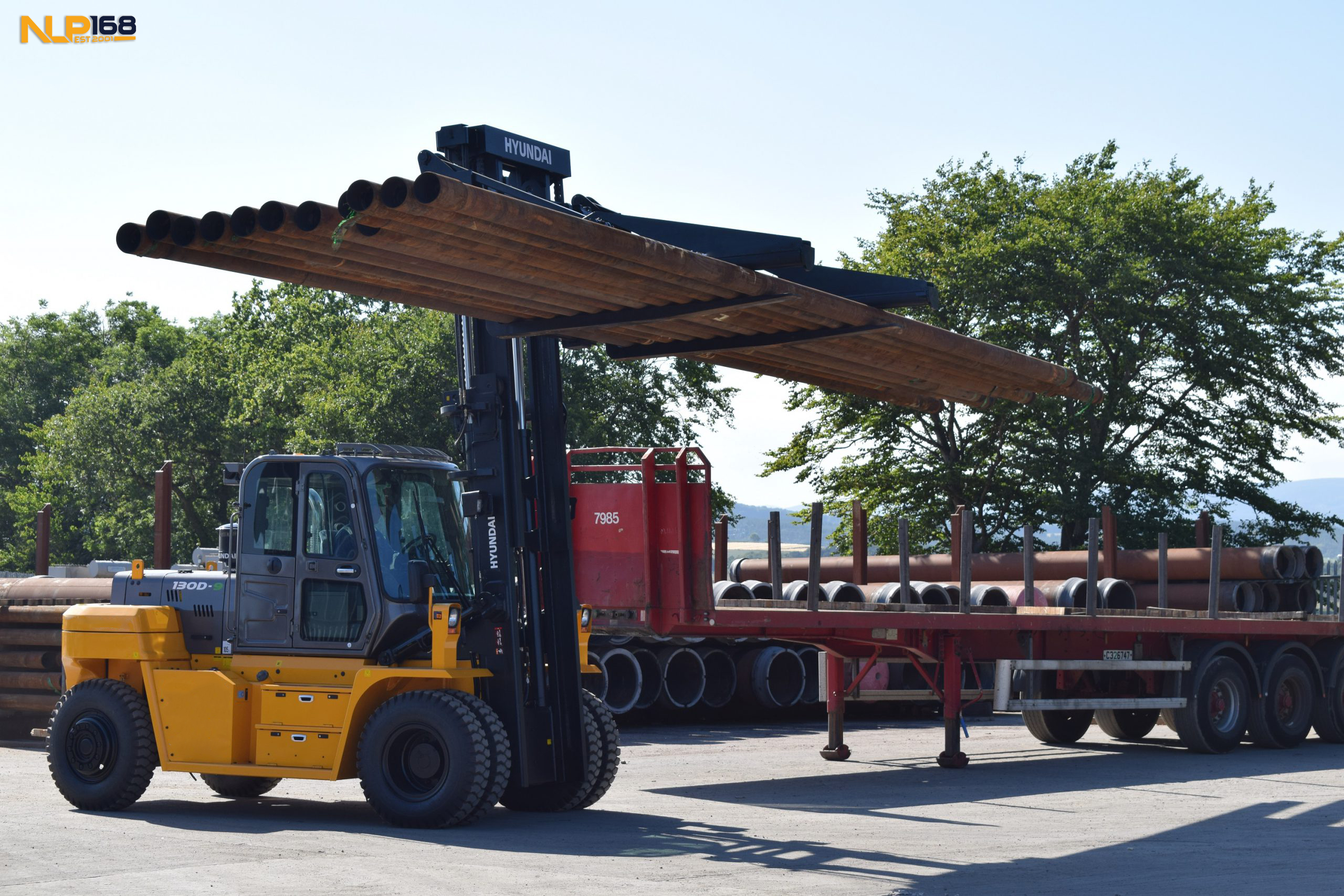
Recommended models: Container forklifts, heavy-duty diesel forklifts.
Manufacturing and Industrial Factories
On production lines, forklifts support:
- Transporting raw materials between workshops
- Moving finished goods to packaging zones or finished product warehouses
- Integrating with automated systems (AGVs, conveyor belts, etc.)
Recommended models: Electric forklifts, counterbalance forklifts, semi-automated forklifts.
Construction Industry
Construction sites rely on forklifts to move heavy materials like steel, bricks, and cement, with uses including:
- Lifting materials to elevated work areas
- Navigating rough, unfinished terrain
- Supporting on-schedule, fast-paced construction work
Recommended models: Diesel forklifts, rough-terrain forklifts.
Supermarkets and Consumer Goods Distribution Centers
Large supermarkets and distribution centers use forklifts to:
- Stock goods on high warehouse racks
- Move palletized cargo from delivery trucks into warehouses
- Ensure quiet, emission-free operation to comply with indoor air quality standards
Recommended models: Electric forklifts, semi-automated forklifts, high-lift hand stackers.
Agriculture and Food Processing
In the agriculture sector, forklifts are used to:
- Transport farm produce, fertilizers, and livestock feed
- Load and unload bulk sacks in agricultural warehouses and processing plants
- Operate in damp or low-temperature cold storage facilities
Recommended models: LPG forklifts, cold-storage electric forklifts.
Heavy Industry and Machinery Manufacturing
Machinery, casting, and metallurgy factories use forklifts to:
- Lift and move steel billets, casting molds, and heavy industrial equipment
- Transport materials across large production workshops
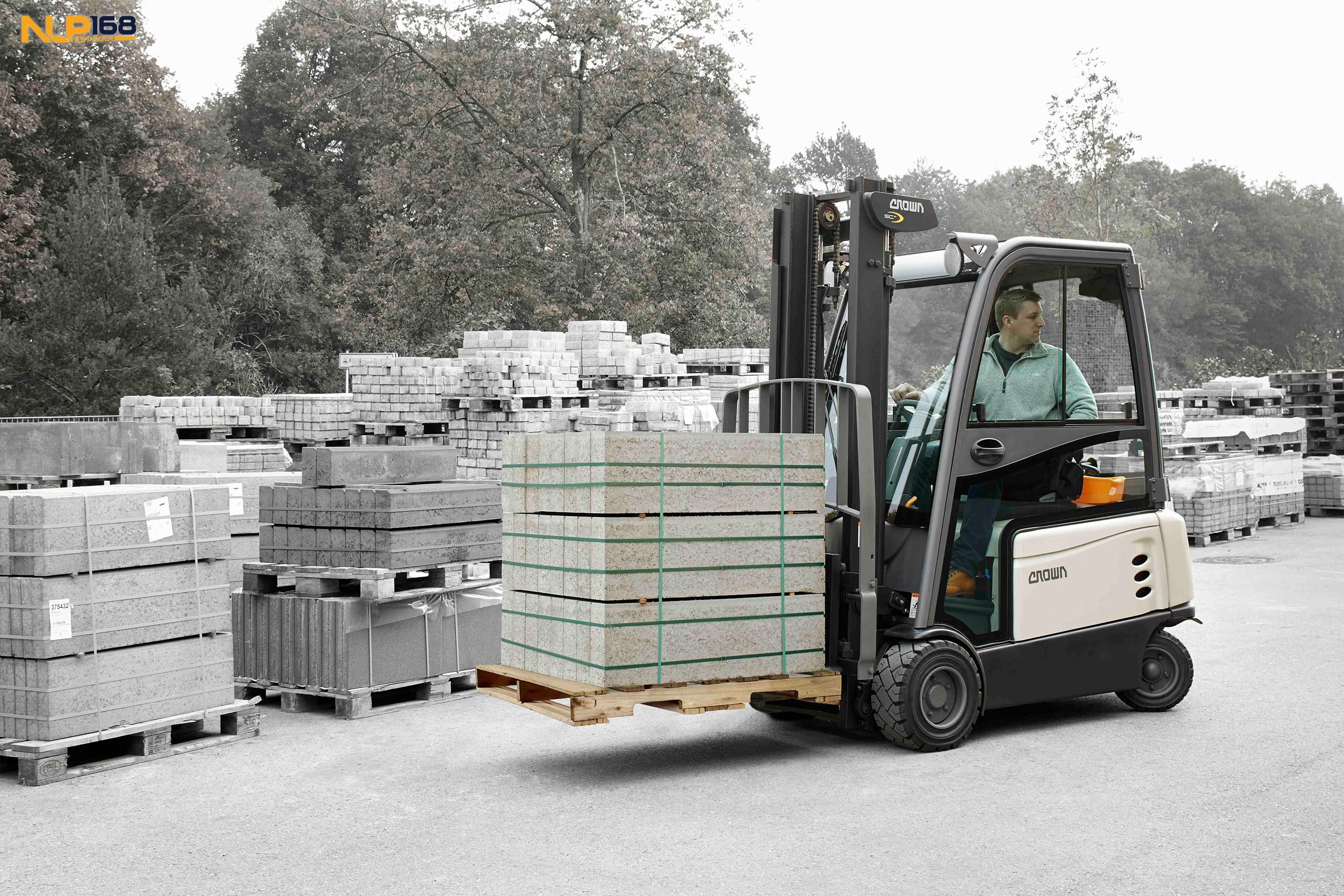
Recommended models: Heavy-duty forklifts (5–50 tons), specialized forklifts.
Pros and Cons of Common Forklift Types
| Forklift Type | Key Advantages | Key Disadvantages | Ideal Use Cases |
|---|---|---|---|
| Electric Forklifts | Zero toxic emissions; quiet operation; low operating costs; easy maintenance; improved battery life (6–8 hours per shift) | Long charging times (6–8 hours); requires backup batteries for continuous use; limited load capacity vs. diesel; higher initial cost; unsuitable for wet outdoor use without specialized models | Warehouses, distribution centers, supermarkets, food and pharmaceutical factories |
| Diesel Forklifts | High power and load capacity; continuous 24/7 operation with fast refueling; durable in harsh outdoor conditions; lower initial cost | High CO2 and exhaust emissions; loud operation; high fuel and maintenance costs; shorter service life due to moving part wear; requires well-ventilated workspaces | Construction sites, seaports, outdoor warehouses, heavy industry |
| LPG Forklifts | Cleaner than diesel; usable in enclosed spaces with proper ventilation; fast refueling; comparable power to diesel; versatile indoor/outdoor use | Flammable fuel requiring strict fire safety compliance; volatile fuel costs; bulky cylinder storage; reduced performance as fuel runs low | Well-ventilated warehouses, mid-sized factories, mixed indoor/outdoor work |
| Hand Pallet Trucks | Lowest cost; compact and easy to maneuver; zero emissions; no training required | Limited to loads under 3 tons and lifting heights under 20cm; physically demanding; low efficiency for high-volume work | Small shops, mini supermarkets, last-mile loading/unloading |
| Semi-Automated Forklifts | Electric motor support for lifting and movement; balanced cost-to-performance ratio; suitable for 1–3m lifting heights | Requires a walking operator; battery degradation after 4–5 hours of continuous use; unsuitable for ultra-heavy loads or heights over 3m | Small to mid-sized warehouses, mid-range stacking work |
Leading Global Forklift Manufacturers
United States
- Crown Equipment Corporation: A large private U.S. manufacturer renowned for ergonomic, award-winning designs. It excels in stand-up electric forklifts, order pickers, and cold-storage models.
- Hyster-Yale Materials Handling: Hyster specializes in heavy-duty, harsh-environment forklifts for ports and industrial sites, while Yale focuses on warehouse and logistics equipment.
- Clark: Known as the “inventor of the modern forklift.”
Germany
- KION Group: The world’s second-largest forklift conglomerate, with a portfolio of specialized brands:
- Linde: A premium brand famous for hydrostatic drive technology that delivers smooth, precise operation.
- Baoli: A cost-effective joint-venture line (German technology, Chinese manufacturing) popular in Vietnam for its affordable pricing.
- Additional brands: STILL, Fenwick.
- Jungheinrich AG: A leader in electric forklift and intralogistics automation technology, with distinctive yellow designs, industry-leading lithium-ion battery systems, and narrow-aisle reach trucks.
South Korea
- Hyundai Material Handling: While ranked in the global Top 15–20 for market share, it has strong brand recognition thanks to its parent group’s reputation in automotive and construction machinery. Its strengths include robust diesel and LPG forklifts with car-like ergonomic cabins, reliable performance on outdoor sites, and competitive pricing between Japanese and Chinese models.
- Doosan Bobcat: Specializes in high-power diesel forklifts.
Japan
- Toyota Industries Corporation: The global market leader in forklift sales and brand recognition for consecutive years. Its portfolio includes Toyota, Raymond, BT, and CESAB, with a focus on durable, stable models equipped with advanced safety features like the SAS anti-tip system.
- Mitsubishi Logisnext: A conglomerate formed from the merger of Mitsubishi, UniCarriers, TCM, CAT, and Nichiyu, offering a diverse product range. TCM and Mitsubishi diesel forklifts are popular in Vietnam for their long-lasting, reliable performance.
- Komatsu: While best known for excavators, its forklifts are legendary for durability in Vietnam’s used forklift market.
China
Over the past 5–10 years, Chinese manufacturers have rapidly expanded into the global Top 10 with affordable, improving-quality models:
- Anhui Heli (Heli): China’s top forklift manufacturer, widely popular in Vietnam’s budget new forklift segment.
- Hangcha Group: Heli’s direct competitor, with strong offerings in mainstream diesel and electric forklifts.
Forklift Brands Available in Vietnam (As of 2025)
The Vietnamese forklift market is diverse, with leading international brands distributed through exclusive authorized agents or large importers.
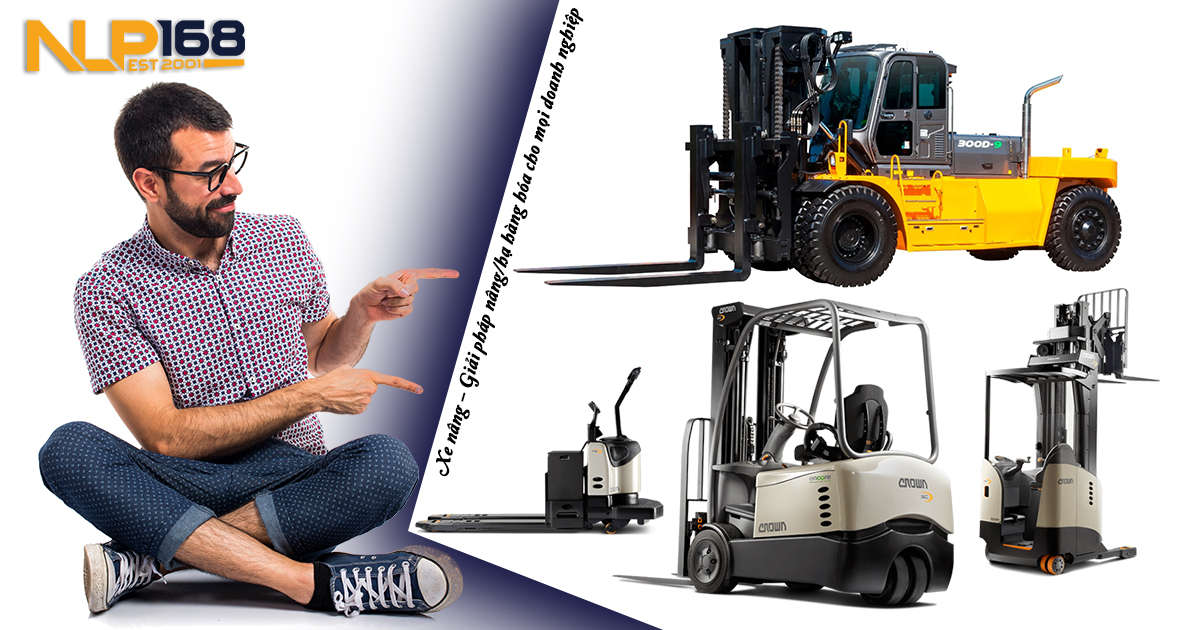
Key operating brands include:
- Crown and Hyundai: Exclusive distribution by Nhat Lo Phat 168 Co., Ltd.
- Yale: Official distribution by Ky Luc Co., Ltd., with a focus on electric forklifts.
- Clark: Official distribution by CLARK Material Handling Vietnam Co., Ltd.
- Linde: Available through major importers as part of the KION Group.
- Hyster: Exclusive distribution by Mico Hyster.
- Toyota: Exclusive distribution by UMW Vietnam, leading the market with diesel, gas, electric, and reach truck models.
- Komatsu: Popular for its durability, imported by multiple distributors.
- TCM: Exclusive distribution by SANYO since 1997.
- Mitsubishi: Distributed by importers including Nhat Nam.
- Heli: Exclusive distribution by Xe Nang Binh Minh, the top Chinese forklift brand in Vietnam by market share.
- Hangcha: Exclusive distribution by Xe Nang Uy Tin.
Other notable brands: Baoli, Doosan, Soosung (South Korea), Nichiyu, Nissan, Jungheinrich, plus budget Chinese models like Mima and Zowell.
For purchasing or renting, contact authorized agents for personalized advice on models, pricing, and after-sales support.
Key Criteria for Choosing a Forklift
Selecting a forklift is a critical investment that directly impacts warehouse efficiency and operating costs. Use these 6 core criteria to find the right model for your business:
- Load Capacity and Cargo Dimensions (the most critical factor for safety and durability):
- Maximum load: Choose a forklift with a load rating 20–25% higher than your heaviest cargo (e.g., a 2.5-ton forklift for 2-ton loads) to ensure long-term durability.
- Load center: Account for cargo dimensions—overly long or wide cargo will reduce the forklift’s safe load capacity.
- Cargo type: Palletized, rolled, or loose cargo will determine if you need specialized attachments like paper clamps, brick clamps, or boom extensions.
- Lifting Height and Working Space:
- Maximum lifting height: Match this to your warehouse rack height.
- Lowered mast height: For container or low-clearance work, choose a 3-stage mast with free lift capability to avoid hitting overhead obstacles while raising forks.
- Turning radius: For narrow aisles, opt for a stand-up electric reach truck or 3-wheel forklift.
- Power Source (Fuel Type):
- Electric: Best for enclosed, emission-controlled environments.
- Diesel: Ideal for heavy-duty outdoor work.
- LPG: A versatile middle ground for mixed indoor/outdoor use.
- Tire Type:
- Pneumatic tires: For rough, uneven outdoor terrain.
- Solid tires: For flat warehouse floors, eliminating puncture risks and improving stability for high lifting.
- Brand and Origin:
- Premium segment (U.S., South Korea, Japan, EU): Durable, high-tech models with higher upfront costs and strong resale value.
- Mid-range segment (China): Affordable models with fast ROI and improving quality.
- Used forklifts: Typically Japanese models, requiring thorough inspections of the engine and hydraulic system.
- After-Sales Service and Replacement Parts:
- Choose agents located near your warehouse with professional technical teams.
- Ensure replacement parts are readily available locally to avoid costly downtime.
- Verify warranty terms (usually 12–24 months or based on operating hours).
If you need personalized advice for a specific use case (e.g., cold food storage or construction material warehouses), feel free to share more details.
Conclusion
Looking to purchase a forklift for your warehouse? Research electric, diesel, and hybrid models, and use the standard selection criteria outlined above to optimize productivity and reduce operating costs.
In the Industry 4.0 era, forklifts serve as the “backbone” of warehouses, ports, and manufacturing facilities, freeing up manual labor and accelerating cargo turnover.
Investing in a forklift is an investment in your business’s productivity. We hope this guide has provided you with a comprehensive overview to select the perfect forklift for your operational needs.