



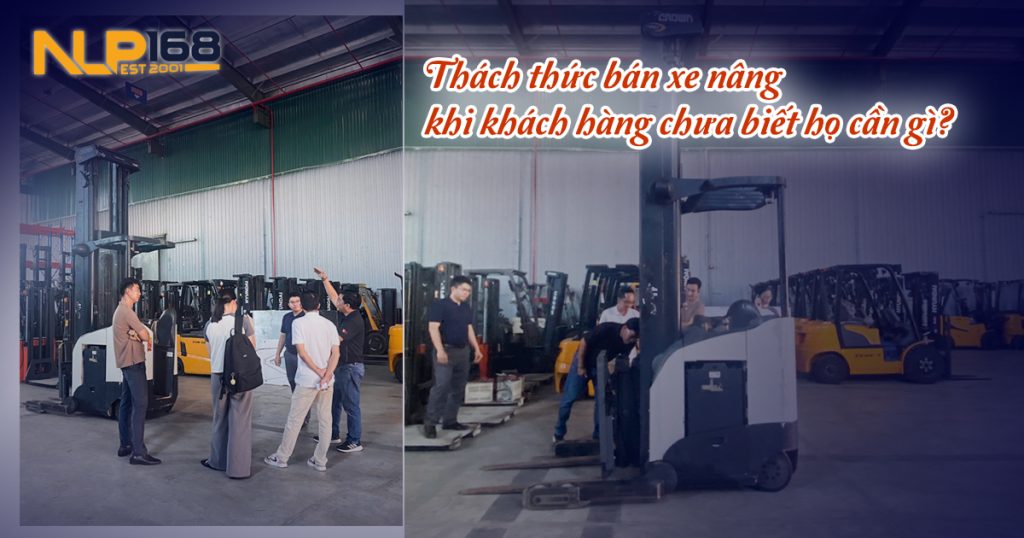
How does selling forklifts when customers don’t know they need work?
Selling forklifts when customers don’t know they need isn’t about selling a product, but about selling a solution—helping them operate efficiently so they’ll know exactly what they need… and come back when they need upgrades.
After years in the industry, I’ve realized that many customers lack or don’t fully understand the technical knowledge needed to determine the most suitable forklift equipment for their operational needs.
Today, many companies still choose forklifts based on superficial criteria like price or load capacity without considering actual operating conditions, which often leads to waste and risks.
In many cases, this results in underutilized equipment, continuous maintenance needs, operational risks for workers, and most importantly, high financial costs.
In short, when customers aren’t clear on “what they truly need” , selling forklifts can easily become a game of “guesswork”.
Criteria for selling forklifts when customers who don’t know they need?
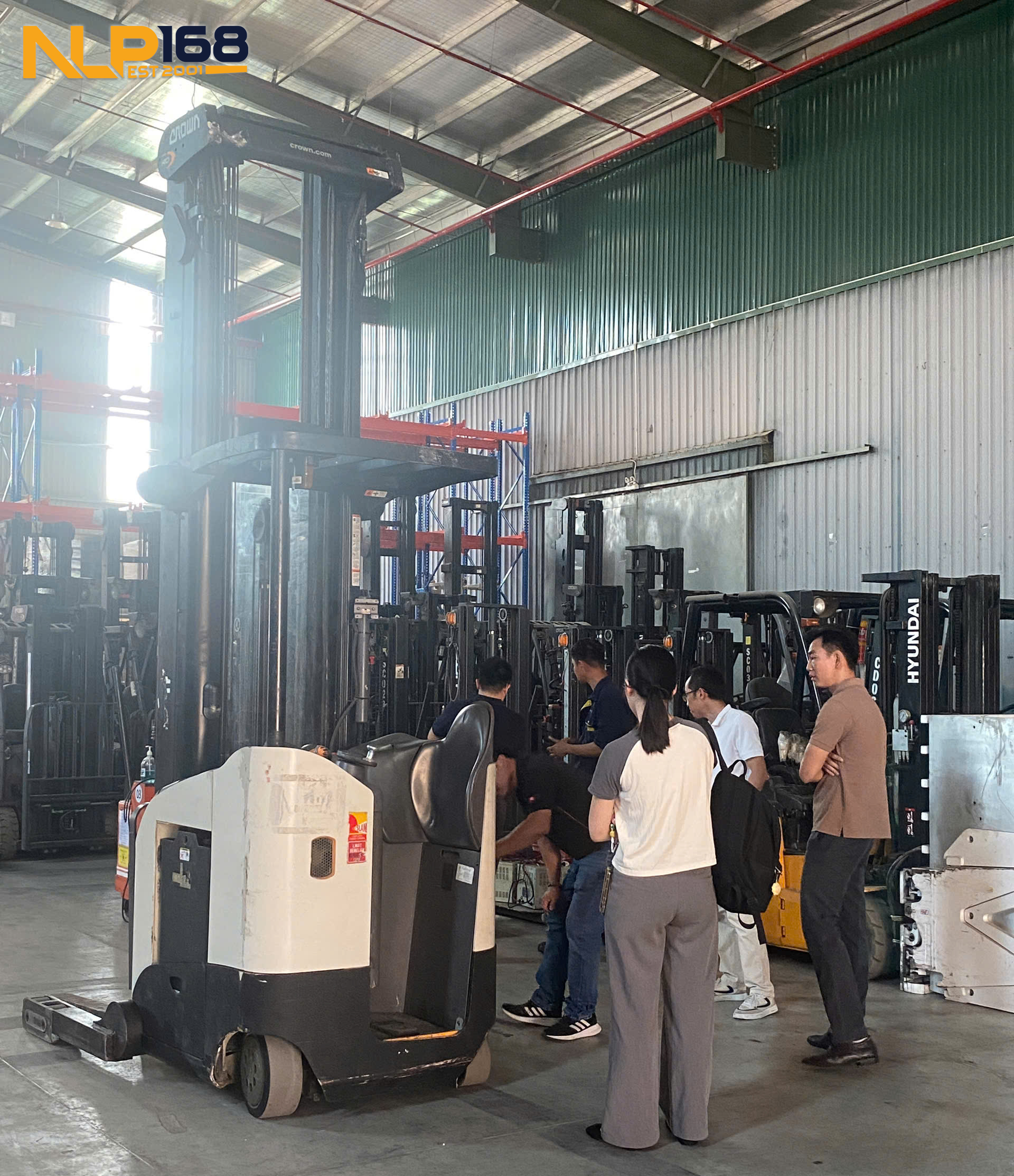
To determine the right forklift size for an operation, Nhất Lộ Phát 168 conducts warehouse site visits, talks with operators, and analyzes environmental conditions such as uneven floors, operational aisles, height restrictions, and cold storage environments.
With this technical challenge, I can affirm: not all customers know what they need.
Sometimes, even experienced fleet managers struggle to choose forklifts—not due to lack of capability, but because of the wide variety of models, technologies, and complex applications that require deep technical expertise.
Customers often choose models with far more power than needed or configurations unsuited to real operational contexts. They also frequently select too few units, failing to meet safety and productivity standards.
Moreover, many overlook critical factors such as daily working shifts, travel distance, or floor type.
These details directly impact the choice between electric forklifts, internal combustion forklifts, reach trucks, pallet jacks, and other types of forklifts.
Common mistakes
Another Common Mistake: Overlooking Real Working Conditions
Examples:
- Forklifts operating in cold storage require special components.
- In areas with explosion hazards, safety requirements are even more stringent.
- Overlooking these conditions not only affects machine durability but also impacts operator safety and cargo integrity.
Many people focus only on the purchase price while forgetting an important concept:
- Total Cost of Ownership (TCO).
- A cheap forklift may seem like a good deal today, but tomorrow it could become a nightmare, with high energy consumption, frequent breakdowns, and poor availability rates.
Modern forklifts are equipped with advanced technology, such as lithium-ion batteries, automatic braking systems, remote measurement systems, remote monitoring, and smart safety features – these improvements may have higher initial costs.
However, many customers don’t even know about these options and therefore miss real opportunities to increase long-term efficiency.
So What should you do selling forklifts when customers don’t know they need?
In this case, the role of the salesperson has evolved into a technical and strategic consultant.
Understanding customers deeply to propose suitable solutions begins with thorough diagnosis: operational surveys, understanding material flow, warehouse layout, storage height, and peak operating times.
- A fundamental part of this consulting work is customer education – clearly explaining the differences between forklift models, power sources, tire types, ergonomics, and safety features.
- Illustrating with data can show how a slightly higher investment now can generate significant savings later.
- There is no room for one-size-fits-all solutions. Each customer has unique operations and needs a personalized proposal.
- This includes everything, from contract types (purchasing, short-term or long-term rental) to accessories that enhance safety or optimize productivity.
- Therefore, the main focus must always remain the same: safety and efficiency.
- After all, the real value of a forklift lies in its ability to make operators’ work easier, minimize accidents, and contribute to faster and more reliable logistics flow.
- Companies applying this method see clear results: fewer breakdowns, lower operating costs, longer equipment lifespan, and most importantly, safer and more productive operators.
- This positive impact strengthens customer relationships and positions the supplier as a strategic partner.
- By adopting a consulting role, sales professionals contribute to improving the efficiency of the entire supply chain.
- In an increasingly competitive market, this approach is no longer a differentiator — it has become a mandatory requirement.
Conclusion
Selling forklifts when customers don’t know exactly what they need is a common challenge, but we can completely solve it if we apply the right approach.
To overcome these challenges, you need to focus on “educating” and “demonstrating value” to customers – through the right questions, real-world demos, transparent comparisons, and specific case studies.
When they clearly understand the issues, their real needs will emerge, and selling forklifts becomes much easier.