




What is a forklift battery?
A forklift battery is a heavy-duty, industrial-grade battery pack that not only powers the vehicle’s movement and lifting capabilities but also acts as a counterweight to keep the forklift stable.
Forklifts play an essential role in warehouses, factories, and construction sites, and one of their most critical components is the battery. In addition to providing power, the battery is also crucial in determining the forklift’s performance, safety, and operational efficiency.
Most first-time forklift users and owners always ask: What is the weight of a forklift battery?
Finding the answer isn’t straightforward, as the weight depends on the type of forklift, battery size, and technology.
Understanding the weight of this equipment is vital for operation, setting up charging stations, and workplace safety.
Let’s examine the factors that influence battery weight.
Why Forklift Battery Weight Matters
The weight of a forklift battery is more than just a measurement. It has both practical and safety-oriented implications.
Forklifts handle extremely heavy loads, and the battery acts as a counterweight to prevent the equipment from tipping forward.
A battery that is lighter than recommended can compromise stability, while one that is too heavy can damage the forklift’s frame or suspension system.
Furthermore, battery weight also affects:
- Power and Runtime: Larger, heavier batteries can have a greater energy capacity, allowing the forklift to operate for longer periods.
- Maintenance and Replacement Logistics: The large size of the battery necessitates the use of proper equipment for maintenance and replacement, such as lifting jibs or battery changing machines.
The Average Weight of a Forklift Battery
A typical forklift battery weighs between 1,000 and 4,000 pounds (approximately 450 to 1,800 kg). The exact size depends on the following factors:
- Type of forklift (electric forklift, narrow-aisle forklift, high-reach forklift, pallet jack).
- The battery’s size and capacity (measured in ampere-hours, Ah).
- The type of chemistry used in the battery (lead-acid or lithium-ion).
Lead-Acid Batteries
- The most common type of battery is the lead-acid battery.
- The combination of sulfuric acid and lead plates makes this type of battery very heavy.
- An average 36-volt lead-acid battery weighs around 1,000-2,400 lbs (450-1,100 kg), while a 48-volt battery can weigh from 900 to 1,400 lbs (400-635 kg)
Lithium-Ion Batteries
- Lithium-ion batteries are lighter than lead-acid batteries but are still heavy.
- A forklift lithium-ion battery with an equivalent capacity is typically 30% to 40% lighter than its lead-acid counterpart, averaging between 700 and 2,000 pounds (approximately 316 to 900 kg).
- Despite being lighter, they provide consistent power, charge faster, and have a longer lifespan.
Forklift Batteries: Challenges in Storage and Handling
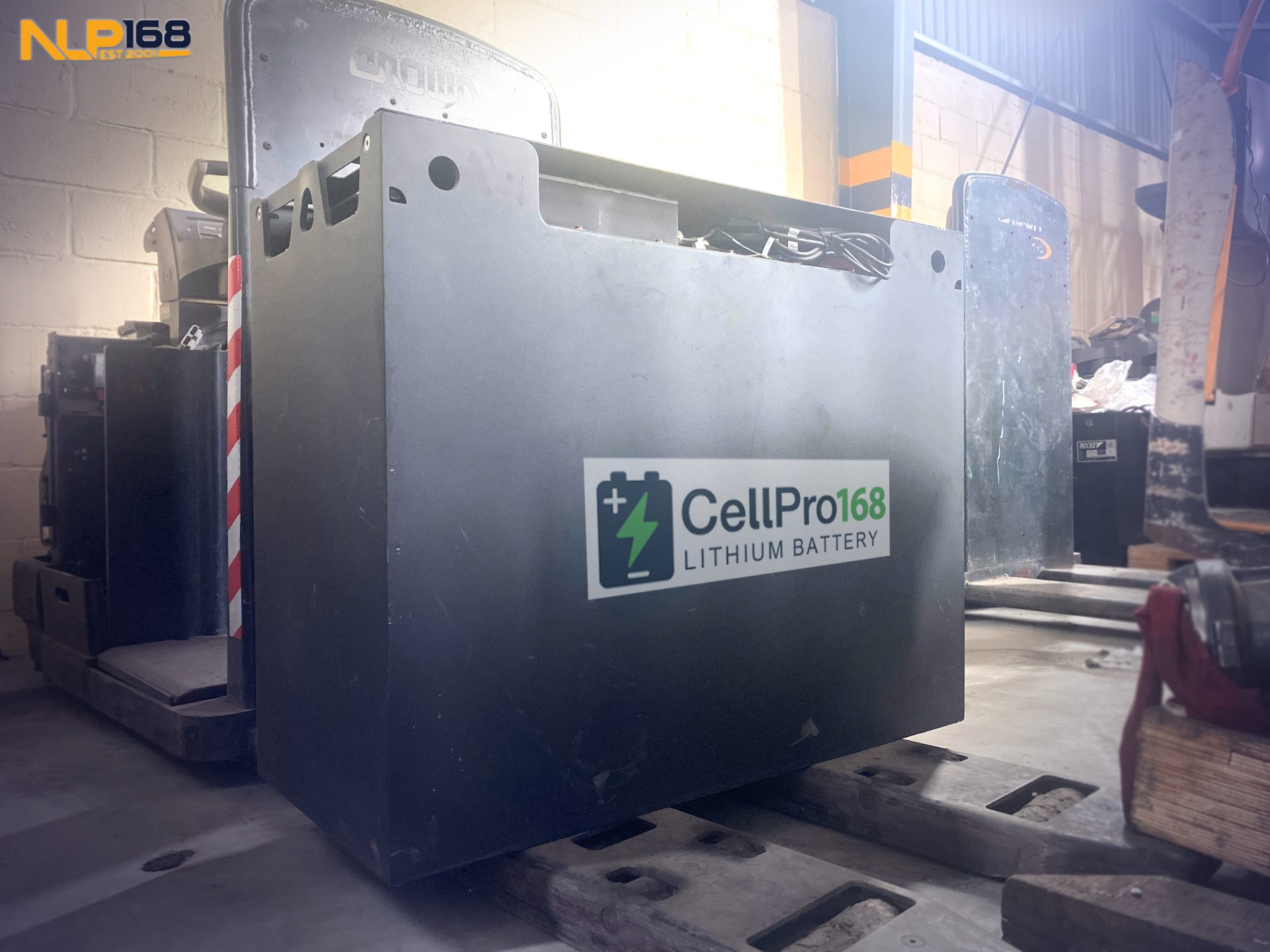
One of the main challenges with using heavy-duty forklift batteries, especially lead-acid batteries, is their storage before installation.
Charging batteries requires a well-ventilated space, sufficient chargers, and adequate room for cooling after charging.
For example, when you have dozens of forklifts, you will need heavy-duty racks to support the weight of batteries that are charging or awaiting reinstallation.
In contrast, lithium-ion batteries are charged within the forklift and can be opportunity-charged between shifts, eliminating the need for excessive battery handling and storage.
Equipment Requirements
There are two options for charging lead-acid batteries.
- A depleted battery can be swapped out for a fresh one, which requires specialized lifting equipment.
- A lead-acid battery can be charged while it remains on the forklift, meaning the vehicle will be out of service during the charging process.
Lithium-ion batteries are typically charged while still on the forklift.
Replacement Costs
Replacing lead-acid batteries can be labor-intensive. Each step is time-consuming and requires skilled staff to handle.
This process is simplified with lithium-ion batteries, which allow for in-forklift charging, offer longer runtimes, and support opportunity charging.
Handling and Storing Heavy-Duty Forklift Batteries
Because the batteries are very heavy, they must be handled with the utmost safety:
- Use Proper Lifting Equipment:
- When handling batteries, use a crane or hoist.
- Only use trained personnel to handle heavy battery services.
- Ensure Proper Ventilation:
- An important consideration for lead-acid batteries is that they emit gases when charging.
- Use Recommended Personal Protective Equipment (PPE):
- When handling batteries, staff should use recommended PPE, such as gloves, aprons, or safety goggles.
- Follow Manufacturer’s Recommended Precautions:
- Ensure you follow the manufacturer’s guidelines.
- Using a battery of an incorrect specified weight can alter the forklift’s lifting capacity and pose a risk to your handling operations.
Calculating the Cost
One large equipment manufacturer found that swapping out lead-acid batteries was costing them approximately $4,800 per day in lost productivity and about $1.5 million per year.
Switching to lithium-ion batteries allowed them to cut these costs nearly in half due to improved efficiency.
Which Type of Forklift Battery to Use?
- Electric Forklifts: Batteries used in electric forklifts weigh between 300 and 600 pounds, as these machines operate with a lighter weight.
- Sit-Down Counterbalance Forklifts: The batteries are much heavier (typically 2,000-3,500 pounds), serving not only as the power source but also as a counterweight.
- Reach Trucks and Narrow-Aisle Forklifts: Reach trucks and narrow-aisle forklifts may use batteries weighing 1,000-2,500 pounds.
Conclusion
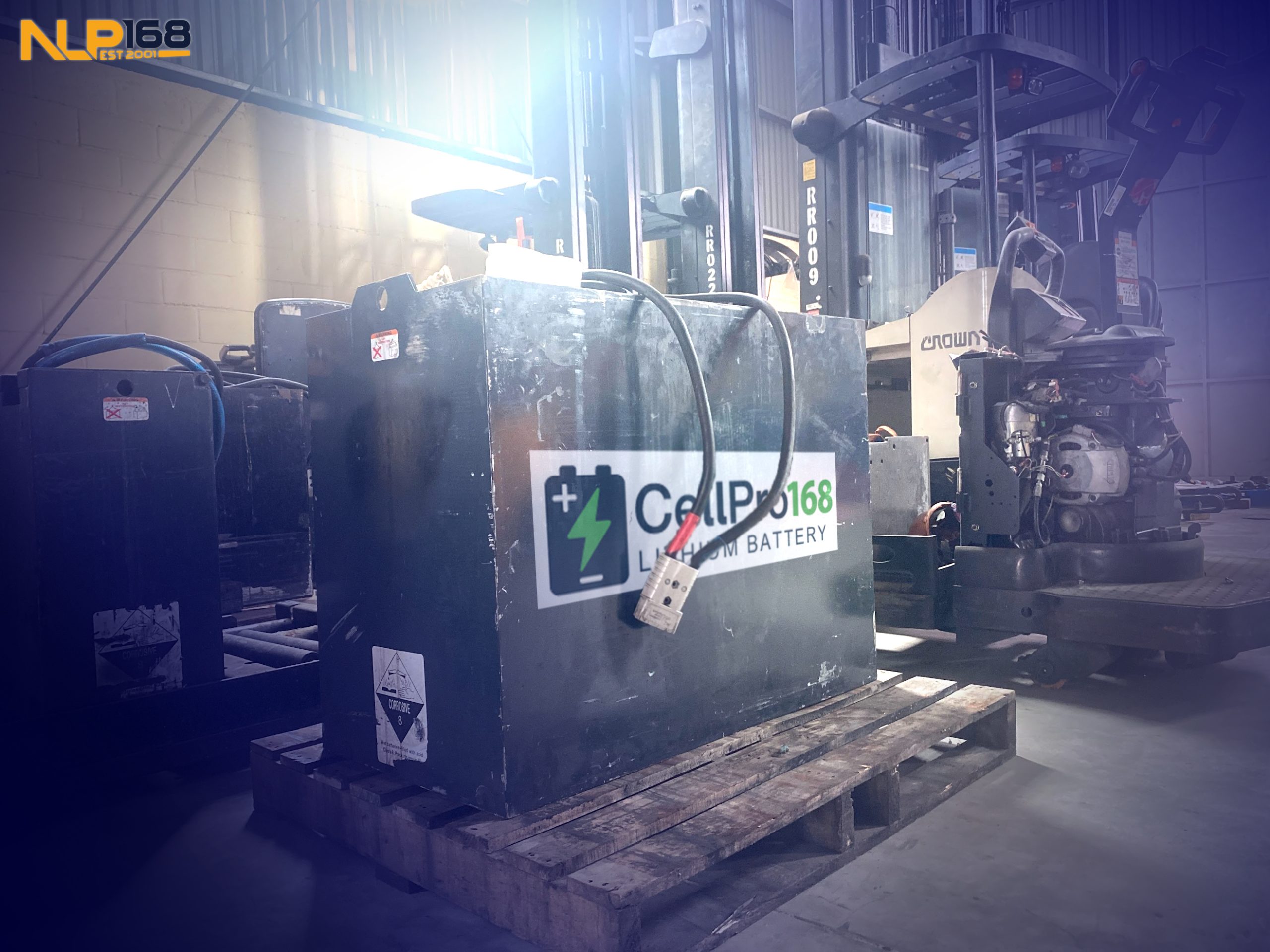
So, what is the weight of a forklift battery?
The answer can vary, but it typically falls within a range of 450kg to 1,800kg (approximately 1,000 to 4,000 lbs), depending on the battery’s type, size, and chemical composition.
The weight not only plays a role in powering the forklift; it is also essential for stability and safety.
Regardless of whether you’re using traditional lead-acid batteries or modern lithium-ion batteries, both must be handled with care.