



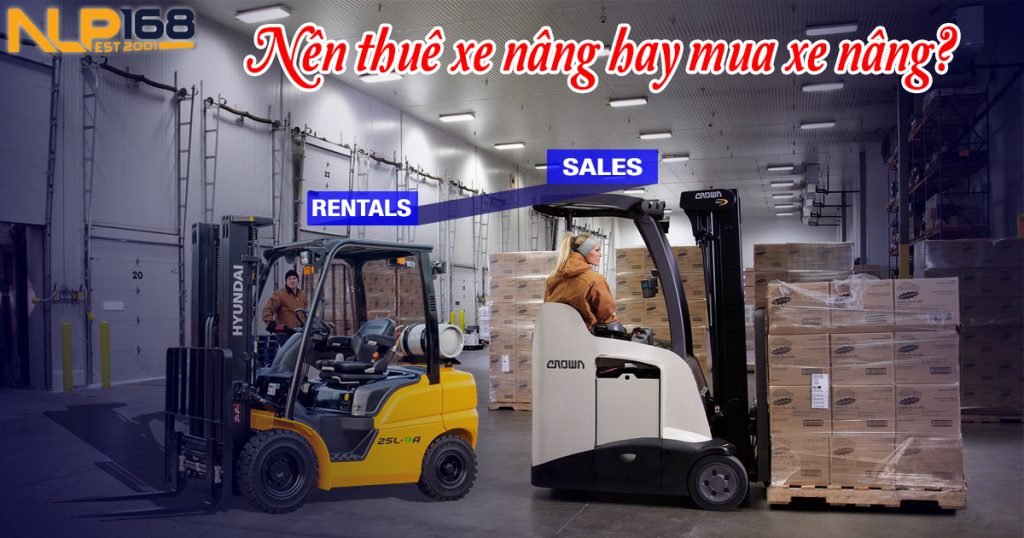
The Dilemma between rentals forklift or buy forklift
Rentals forklift or buy forklift one essentially serves the same ultimate goal: to have a forklift available to serve work needs such as lifting, moving goods in warehouses, factories, and ports; optimizing work efficiency, reducing manual labor; and meeting production and logistics demands as required.
Forklifts are the backbone of warehouse operations. They facilitate the movement of goods, increase efficiency, and support the flow of the supply chain. One of the critical decisions that managers face is whether to invest in owning a fleet of forklifts or rent them as needed. Buying a forklift can provide consistency, while renting a forklift offers flexibility and reduces the initial large capital outlay. The right choice depends on the volume of work, budget, and long-term goals.
This article compares both methods to help warehouse managers make an informed decision.
The True Cost of Buying a Forklift
Purchasing a forklift typically requires an investment of hundreds of millions of dollars, and even used forklifts consume a significant amount of capital.
- In addition to the purchase cost, businesses also face ongoing costs for maintenance, inspection, and unexpected repairs.
- These costs not only affect the budget but can also cause downtime.
- Insurance, registration, and compliance requirements add to the burden.
- Forklifts also depreciate and eventually need to be replaced.
- When the fleet exceeds demand, businesses must allocate storage space for equipment that may be idle.
Ownership is most practical for operations that use forklifts frequently and continuously, but long-term costs and reduced flexibility can be limiting.
The Flexible Advantage of Renting a Forklift
Renting a forklift allows warehouse managers to scale up their fleet as needed without committing to long-term ownership.
- This form is particularly useful during peak seasons or short-term projects.
- This flexibility enables managers to meet demands without having to carry equipment that may not be used for several months.
- Another advantage is access to a diverse range of models.
- Instead of relying on a limited fleet, warehouses can choose machinery that suits each job.
- Forklift rental service providers make this process more efficient.
For example, companies seeking forklift rental services in Ho Chi Minh City can quickly find the equipment they need without having to wait for a purchase.

The contract for renting typically includes maintenance and replacement, reducing downtime and transferring responsibility to warehouse staff.
This allows businesses to focus on their core operations.
When to rentals forklift or buy forkliftt?
Buying a Forklift
- For warehouses with continuous and high-volume usage, buying a forklift can be more cost-effective in the long run.
- The initial cost can be offset by daily productivity, especially when the equipment is used to its full capacity.
- Ownership also allows for customization of the fleet and regular training on specific models.
- Businesses with in-house service teams can manage maintenance at a lower cost, making ownership a better option.
- Large operations that require multiple forklifts at all times often benefit most from ownership, as the convenience of having equipment always available outweighs the flexibility of renting.
Renting a Forklift
- Suitable for:
- Short-term needs, seasonal projects.
- Want to save on initial investment costs.
- Avoid maintenance and depreciation risks.
- Advantages:
- Flexible rental periods, no maintenance worries.
- Can change equipment types as needed.
Current Trends in Forklift Usage
The forklift industry is evolving as warehouses adopt efficient, safe, and sustainable equipment.
- Electric forklifts are becoming increasingly popular due to their lower emissions, quieter operation, and reduced maintenance needs compared to internal combustion forklifts.
- Automation is another trend, with some warehouses integrating semi-automatic forklifts and telematics to monitor usage.
- These technologies improve productivity but come with high upfront costs, making renting equipment an attractive way to test new devices.
- Safety requirements are also changing. Resources like Hyundai and Crown’s industrial electric forklifts provide guidance on training, safe operation, and compliance.
- For many businesses, partnering with rental service providers to manage inspections and maintenance makes it easier to meet these standards.
These developments demonstrate how quickly equipment needs can change and how rental services provide a solution to keep up with demand without long-term commitments.
Making the Right Decision for Your Warehouse
The best approach depends on the frequency of forklift needs, current budget, and future growth plans.
Businesses with stable daily forklift usage may benefit from owning, while those with seasonal or fluctuating workloads may find renting more practical.
Renting also allows companies to try out different models before deciding to buy, minimizing the risk of investing in equipment that may not meet long-term needs.
Safety remains a core consideration for both options. Warehouses that adopt best practices, such as those outlined in forklift safety tips, will be better positioned to protect workers and maintain productivity, regardless of whether they rent or own.
By considering financial factors alongside operational and safety priorities, managers can choose the option that best supports their warehouse.
Conclusion: Should you rentals forklift or buy forklift?
There is no single answer to the question should you rentals forklift or buy forklift? Renting offers flexibility and reduced maintenance responsibility, while owning provides stability and control for high-demand environments.
The smarter choice is the one that aligns with the warehouse’s workload, budget, and long-term strategy, ensuring safe and efficient operations now and in the future.